After nearly a decade, Stranger Things has finally rolled its last dice. Season 5, the long-awaited final chapter, arrived on Netflix with enormous expectations attached — and that, perhaps, was always going to be its biggest enemy.
This was an okay ending to a great show. There are standout moments, flashes of brilliance, and reminders of why we fell in love with Hawkins in the first place. But when all is said and done, it didn’t quite stick the landing. For a series that once mastered simplicity, Season 5 feels weighed down by its own lore, its own ambition, and a script that never quite found the balance it needed.
At Reshoots Required, that leaves me with mixed feelings.
The Weight of Lore and the Cost of Accessibility
One of the biggest issues with Season 5 is how deeply it leans into sci-fi explanation and dense mythology. Personally, I love that stuff — the science, the rules, the mechanics of the Upside Down. But the show once thrived on something much simpler: a shadow world that was scary because it wasn’t over-explained.
Earlier seasons trusted the audience to accept the “Upside Down” as a concept. Season 5, by contrast, spends a lot of time telling us how everything works. Heavy exposition scenes slow the pacing to a crawl, and you can feel the writers wrestling with the need to justify every supernatural beat rather than letting the horror and emotion speak for itself.
It’s telling that the average viewer always responded best to the show when things were less scientific and more instinctive.
A Few Questionable Creative Choices
Season 5 also brings back a character from Season 2 that was almost universally disliked — a decision that’s baffling even now. Their return adds very little thematically or emotionally and only serves to further crowd an already busy final season.
Then there are the conveniences. The biggest offender is The Abyss sequence. Visually, it’s impressive. Logically, it makes very little sense. Where were all the Demogorgons, Demidogs, and bats? The show has gone out of its way to establish the hive mind. Surely Vecna — or the Mind Flayer — would have unleashed everything at once.
The uncomfortable truth is that the writers likely knew our heroes wouldn’t stand a chance if that happened. So instead of writing their way through that problem, they simply removed it. It’s a bit lazy, and in a final season, those details matter.
The Daunting Task of Ending an Epic
It was always going to be a monumental challenge for Duffer Brothers to end what essentially became a sprawling, multi-year Dungeons & Dragons campaign. You can feel that pressure in the script. Every choice feels careful, sometimes too careful, as if the show is afraid to commit fully to bold consequences.
Fans were never going to be completely satisfied — that much was inevitable — but Season 5 sometimes plays it so safe that it drains moments of their potential weight.
The Mid-Season High Point
To be fair, the mid-season ending is one of Season 5’s strongest stretches. Will finally realising his power, stepping into his role as a true wizard, and absolutely kicking arse is genuinely satisfying. The effects work here is excellent, and the Demogorgon scenes during this arc are some of the best the show has produced in years.
Unfortunately, once the season moves past that point, it never quite regains the same momentum. From here on out, the story starts to feel increasingly stretched.
Emotional Manipulation and Familiar Tricks
The show once again dangles Hopper’s fate like a carrot on a stick. It’s effective the first time. By Season 5, it’s become predictable.
Max’s return was never in doubt, and the now-overplayed use of Running Up That Hill feels more like obligation than inspiration at this point. The emotional beats still land — barely — but you can feel the machinery behind them working overtime.
Steve remains a highlight, as always. His dynamic with Dustin continues to be one of the show’s most consistently charming elements, grounding the chaos with genuine warmth and humour.
Nancy, however, is a more complicated case. She is a strong female character — one of the show’s best — but her sudden transformation into a near-unstoppable action hero, shooting better than trained professionals and going full Sarah Connor, stretches credibility. Strength doesn’t need to mean superhuman, and the show occasionally forgets that distinction.
Missed Opportunities and Side Distractions
Linda Hamilton is a welcome presence, and her casting makes immediate sense. Unfortunately, her storyline goes nowhere. She exists largely as a side threat to Eleven and the gang, pulling focus away from Vecna when the final season really couldn’t afford that kind of distraction.
The open-ended possibility of Eleven’s survival is cleverly framed — Mike’s final scene is genuinely well written — but it also feels like a cop-out. The writers want emotional ambiguity without the commitment of finality.
Too Many Endings, Not Enough Impact
One of the strangest issues with the finale is how often it feels like it’s ending… only to continue. The final battle happens over halfway through the episode, and what follows is a long series of closure scenes for every character grouping.
These moments aren’t bad, but they’re indulgent. Many of them could have been condensed into a montage, leaving more time for a truly massive, all-out confrontation with Vecna and the Mind Flayer — ideally involving all those mysteriously absent creatures.
The writers clearly wanted a mostly happy ending, and while that’s comforting, it robs the season of weight. You just know or feel things are going to be “alright in the end,” and that knowledge dulls the tension.
Direction, Music, and the Ghost of Season 1
From a technical standpoint, Season 5 is solid. Shawn Levy stepping in to support the final run was a smart move, and the cinematography is often excellent. One Demogorgon attack staged as a single tracking shot is genuinely epic.
The music remains strong — even if Running Up That Hill is pushed a bit too hard — and the final D&D scenes are a lovely full-circle moment. Switching to a new, younger group at the table is a particularly nice touch, reinforcing the idea that these stories never really end.
Joyce delivering the killing blow to Vecna is another quietly satisfying moment. After everything she’s endured since the very first episode, it feels earned.
Still, I can’t help but miss the nostalgia of Season 1. That ET-inspired blend of old-school sci-fi and fantasy magic has slowly faded over the years, replaced by something bigger, louder, and more complicated — but not necessarily better.
Final Verdict
There’s also been chatter about AI usage and the behind-the-scenes documentary makes it clear the finale’s script wasn’t fully ready whilst filming earlier episodes. It was a race against time — and you can absolutely feel that in the final product.
Season 5 isn’t bad. Far from it. But for a show that once showed us how clean and emotionally precise this kind of storytelling could be, the final season feels messy, over-explained, and oddly cautious.
At Reshoots Required, that leaves me with this verdict:
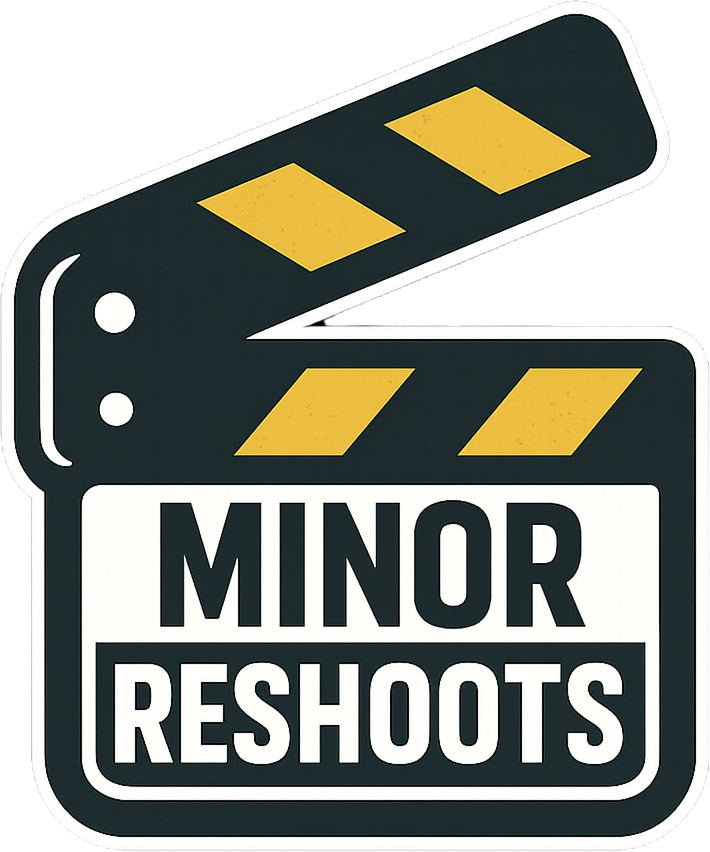
Minor Reshoots Required
What would have helped:
- Less science-heavy plotting.
- Less exposition.
- Fewer endings.
- More attention to detail — and yes, more Demogorgon’s where they logically should have been.
A fond farewell, but not the legendary roll it deserved.
If you liked this review, leave a comment and/or join us on our social media platforms. Links below.